Squirrel repellent for yards and gardens
Squirrels enter a yard along a few fixed routes: a fence top, a branch, the run beside the shed. The PestRay Perimeter Sentry watches one of those routes and answers movement with high-frequency sound waves and an LED flash. The solar IonAway Yard Guardian covers a bed or lawn edge. Both make a route feel less safe rather than blocking it, and work alongside removing what draws squirrels in.
What we recommend
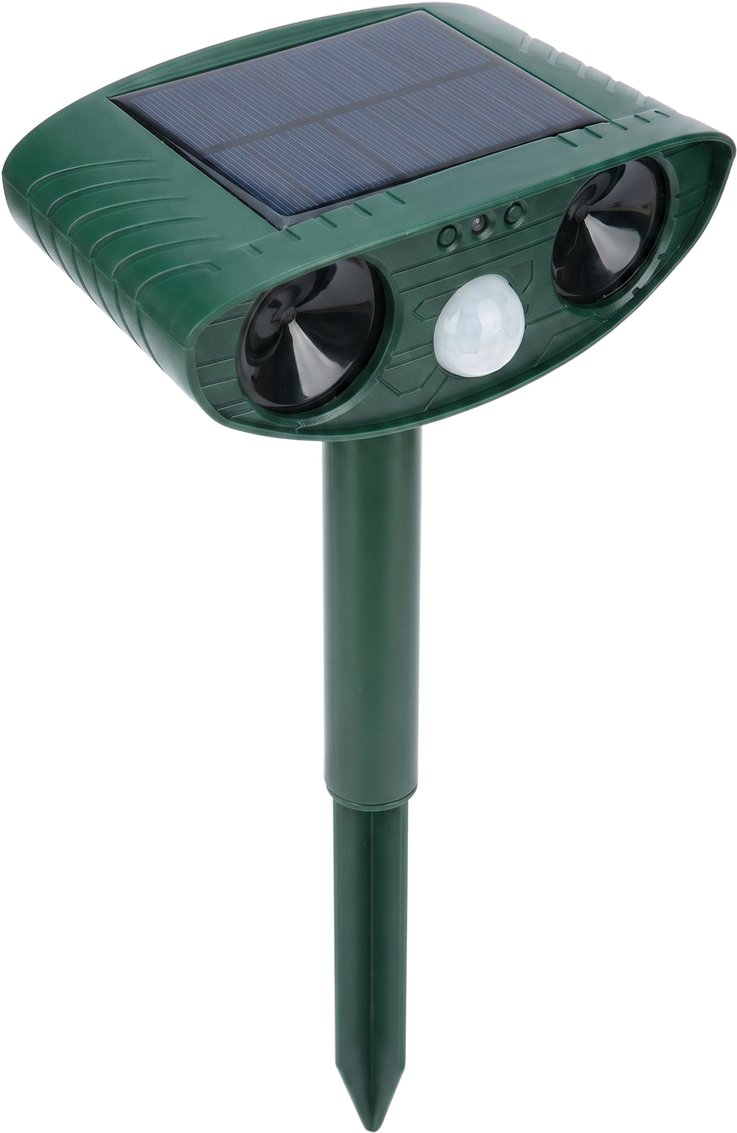
Perimeter Sentry
Solar · motion sensor · sound + LED · stakeStake one facing each route squirrels use, the fence corner or the gap beside the shed. Solar, motion triggered, IP44 rain and splash resistant. One unit covers one approach path, three to four ring a property.
Rated 4.7 out of 5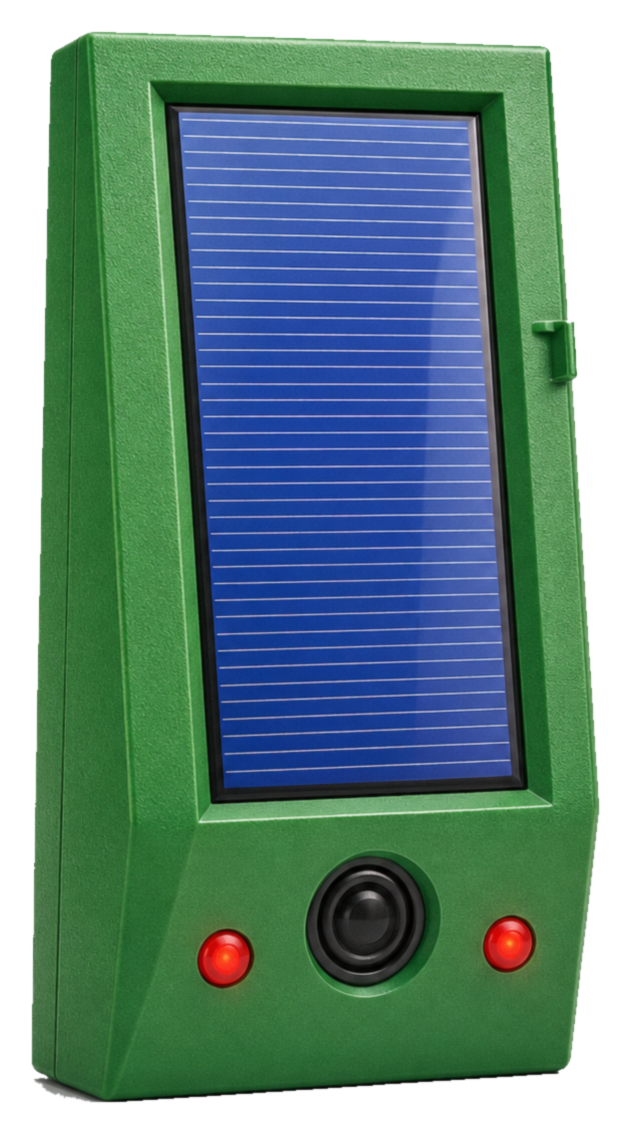
IonAway Yard Guardian
Solar + USB · ultrasonic + LED · stakeSolar with USB backup, running on its own rather than waiting on a trigger. Push it in where squirrels dig or feed — a bed, a lawn edge, the base of a tree.
Rated 4.6 out of 5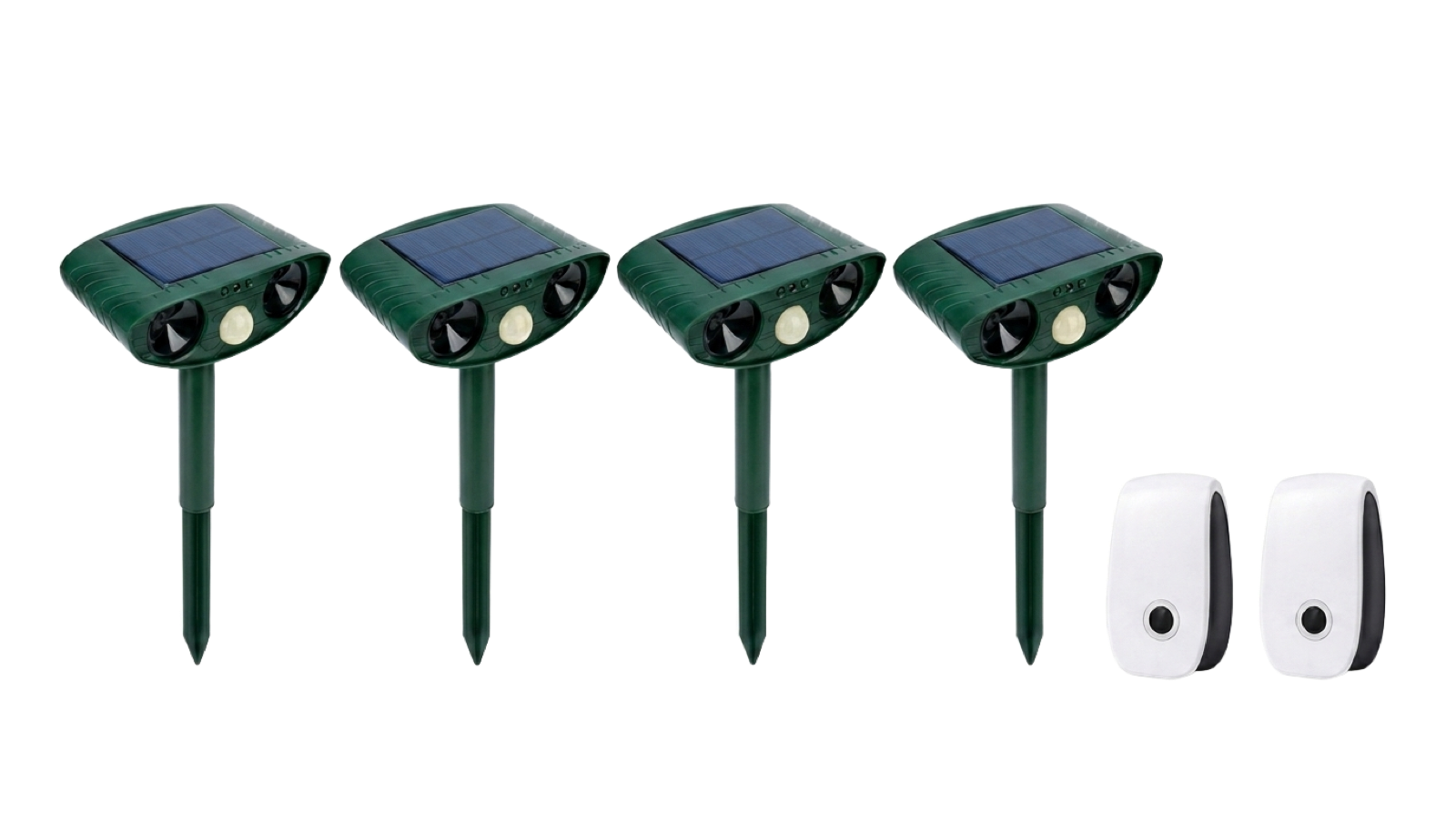
The Perimeter System
4x Perimeter Sentry + Indoor 2-packFour Sentries for the ways in plus two Indoor Plugs, for a yard with more than one route and rooms behind it.
Rated 4.8 out of 5Guides that answer this
- Do Ultrasonic Pest Repellers Really Work? An Honest, Sourced Answer
A candid, evidence-based look at whether ultrasonic pest repellers actually work, where they help, where they fall short, and how to combine methods for real results.
- The Best Humane, Poison-Free Pest Control for the Whole House
A practical, honest guide to protecting your whole home without poison or lethal traps, with methods ranked by effectiveness and humaneness and clear notes on where each one falls short.
Common questions
How long does it take to see results from an ultrasonic repeller?
Most people who notice a benefit see reduced activity within a few days to about two weeks. Results vary by room size, layout, and how established the problem is. If activity has not dropped after a few weeks, the pests may have habituated or there are food and shelter sources you still need to address.
Why do ultrasonic repellers seem to stop working over time?
Because animals habituate. When a pest hears a steady tone for days with no real consequence, it learns to ignore it, much like tuning out background noise. Devices with randomized frequencies slow this, but the fix is layering: pair the device with sanitation and exclusion so the pest has a real reason to leave.
What works better than ultrasonic devices alone?
A layered approach. Sealing entry points and removing food and clutter is the most effective foundation indoors. Outdoors, continuous motion deterrents like reflective solar spinners resist habituation better than sound or static objects. Ultrasonic units are a useful supporting layer, and traps or a professional handle established infestations.
PestRay devices are humane deterrents, not pesticides, part of an integrated approach, not a guaranteed solution. Results vary by placement, local wildlife and how established the problem is.