Perimeter Sentry
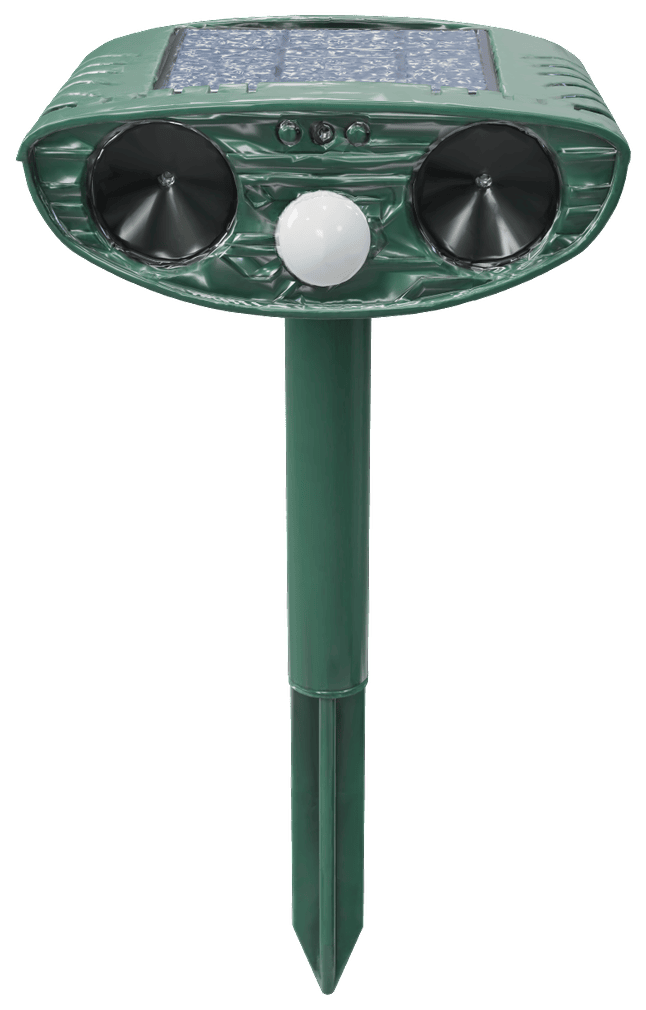
4.7· 180 reviews. Rated 4.7 out of 5, read the reviews.Animals do not wander into a yard at random. They use the same few ways in, the gap under the hedge, the side of the shed, the run along the fence. The Perimeter Sentry watches one of those ways in. A motion sensor covers a forward cone of about 110 degrees, and when something crosses it the unit answers with high-frequency sound waves and an LED flash for about 30 to 40 seconds, then goes quiet again. One unit covers one entry point, not a yard. Three or four placed around a property close the routes a single unit leaves open.
Final step: Commit
- Humane, no poison
- Solar, no wiring
- Motion triggered, not always on
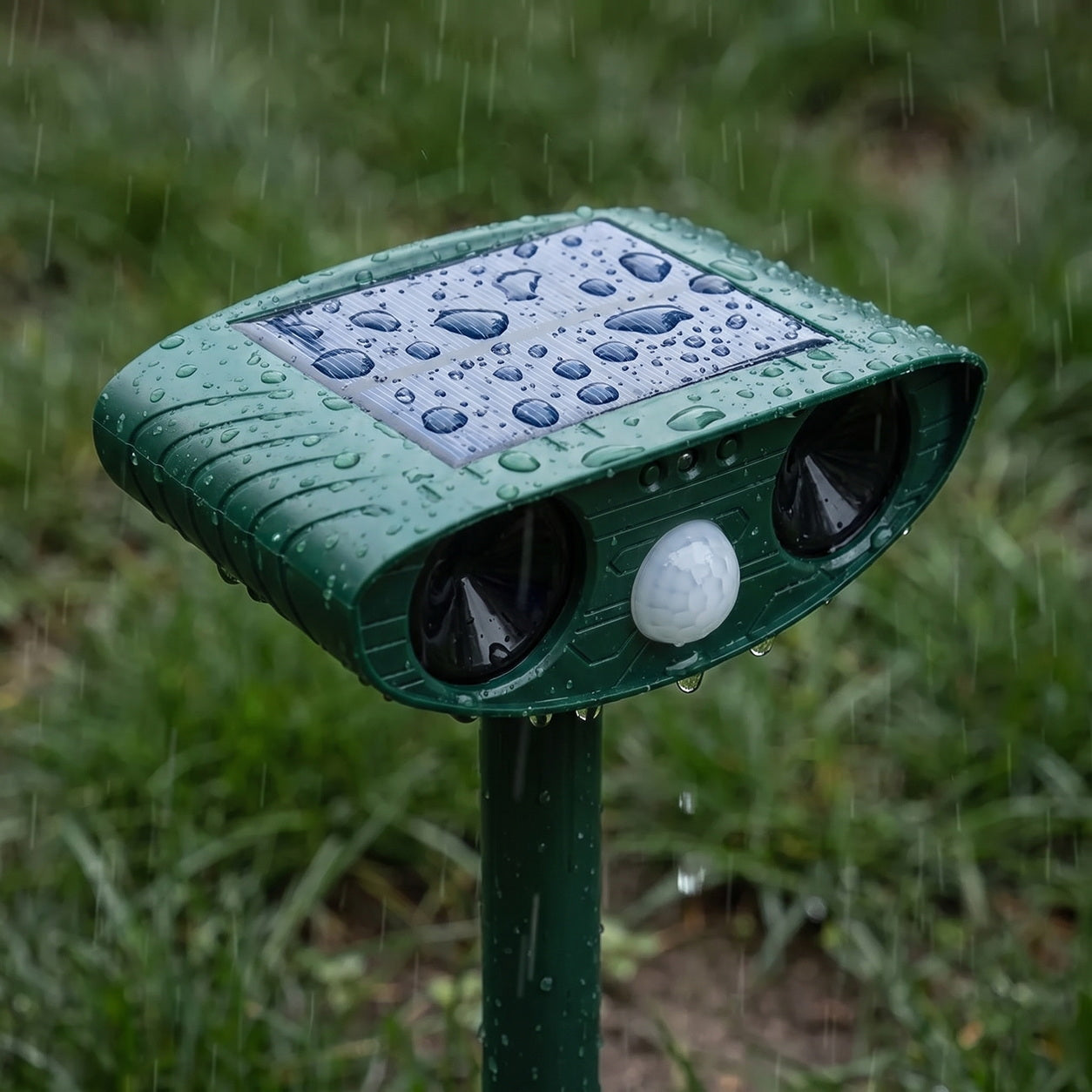
- IP44, rain and splash resistant
The easy ways in stop being easy, one route at a time.
Three steps. Then forget it.
The sensor watches one cone
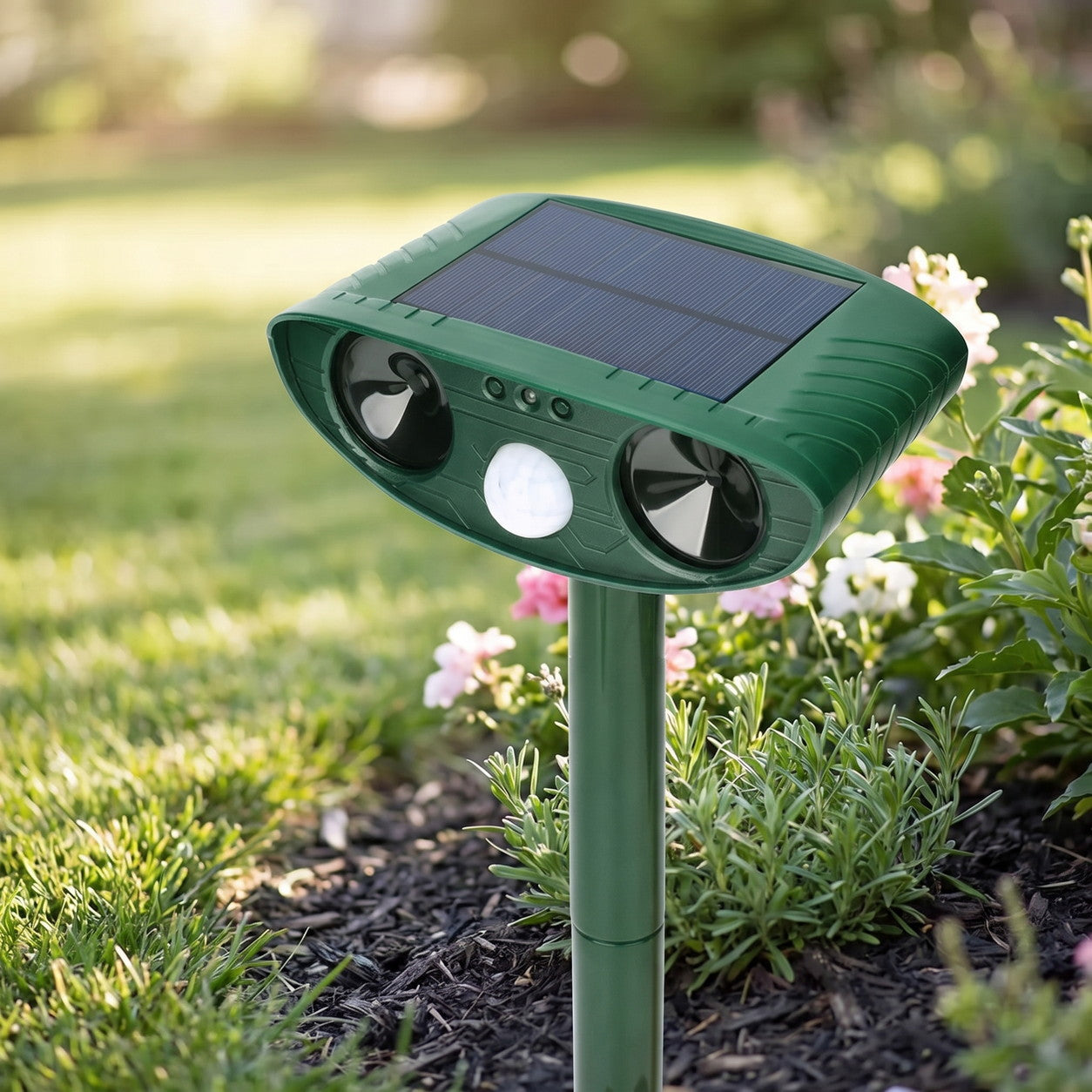
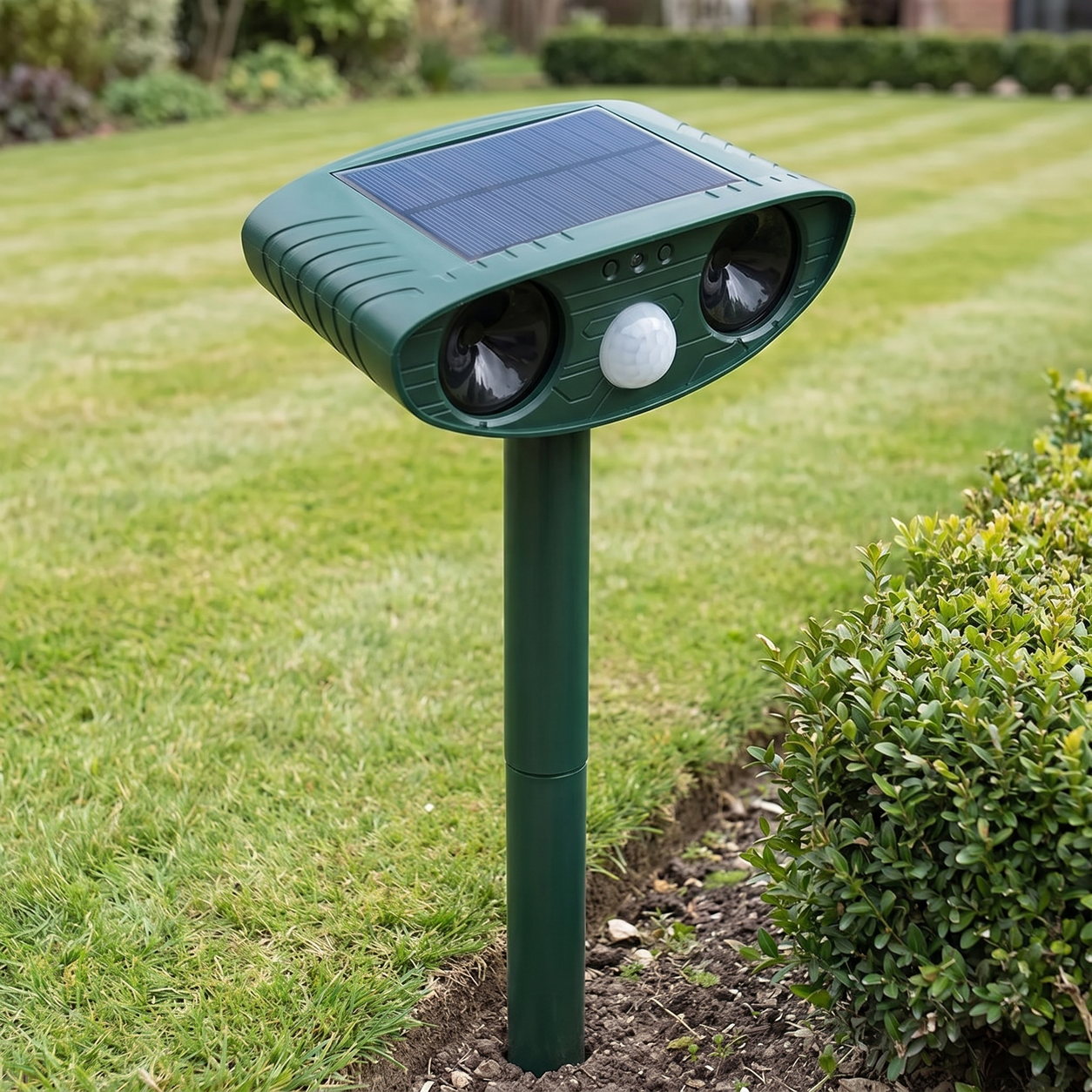
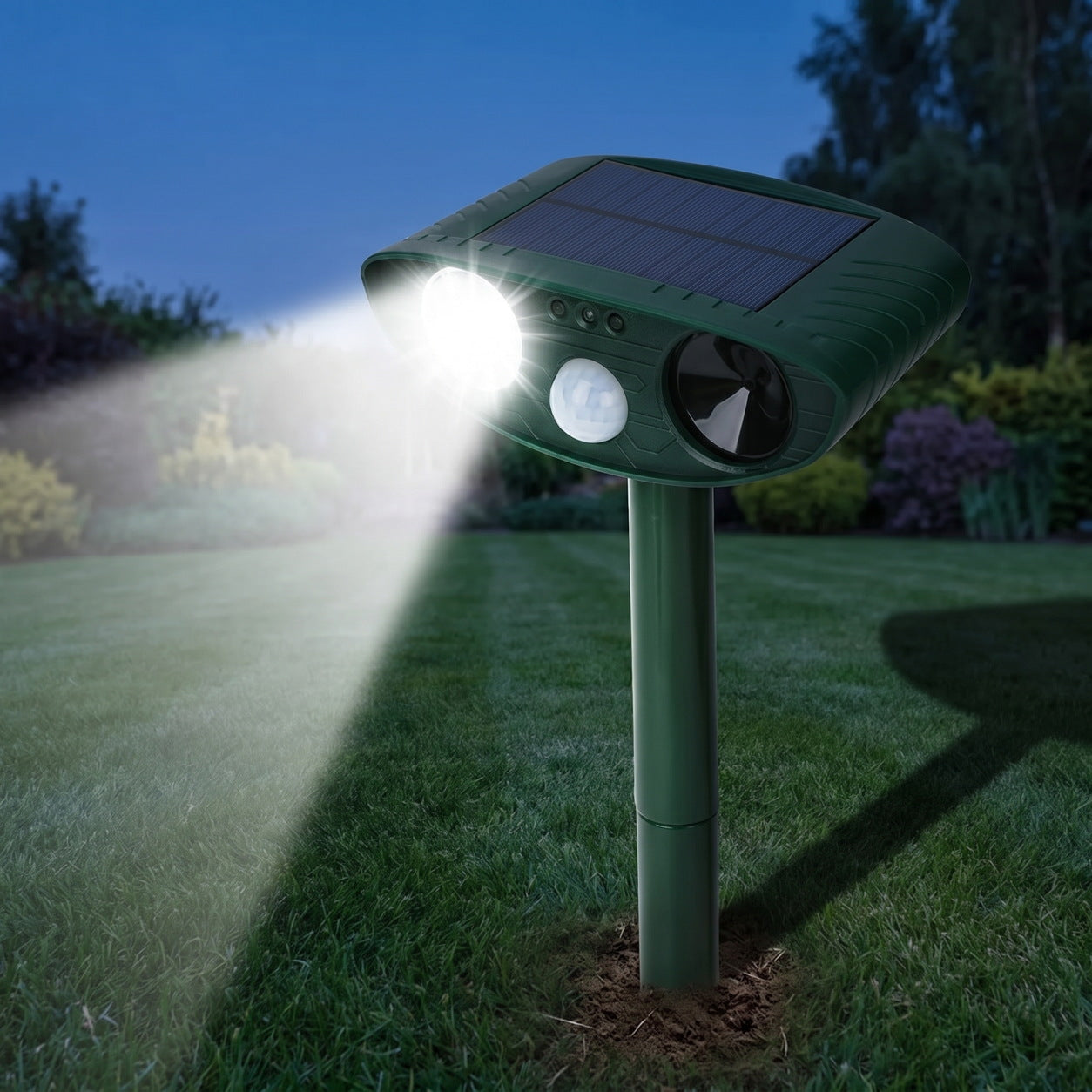
Stake it facing the route animals actually use. The motion sensor watches a forward cone of about 110 degrees and reaches up to about 6 to 8 m in open conditions, stated as roughly 20 to 50 square meters per unit. It watches forward only, so aim it at the gap rather than at the middle of the lawn.
Sound and light fire on entry
When something crosses the cone, the unit answers straight away with high-frequency sound waves from its two front emitters and a flash from the front LED. The cycle runs about 30 to 40 seconds. It is intended to break the calm an animal needs to feed, dig, or settle in.
It goes back to watching
After the cycle the unit falls silent and returns to watching, so it is not pushing a signal into your yard all day. The panel on top recharges the built-in battery through daylight hours, with no outlet to find and no wiring to run.
Designed to help deter yard birds, crows, rodents, rabbits, squirrels, raccoons, snakes, and other small animals crossing into a yard.
One unit is a point solution
Said plainly, because it decides which pack you need. A forward cone of about 110 degrees covers one entry point, the gap in the hedge or the run beside the shed. It is not a yard system on its own, and we will not describe it as one.
Three or four close the ring
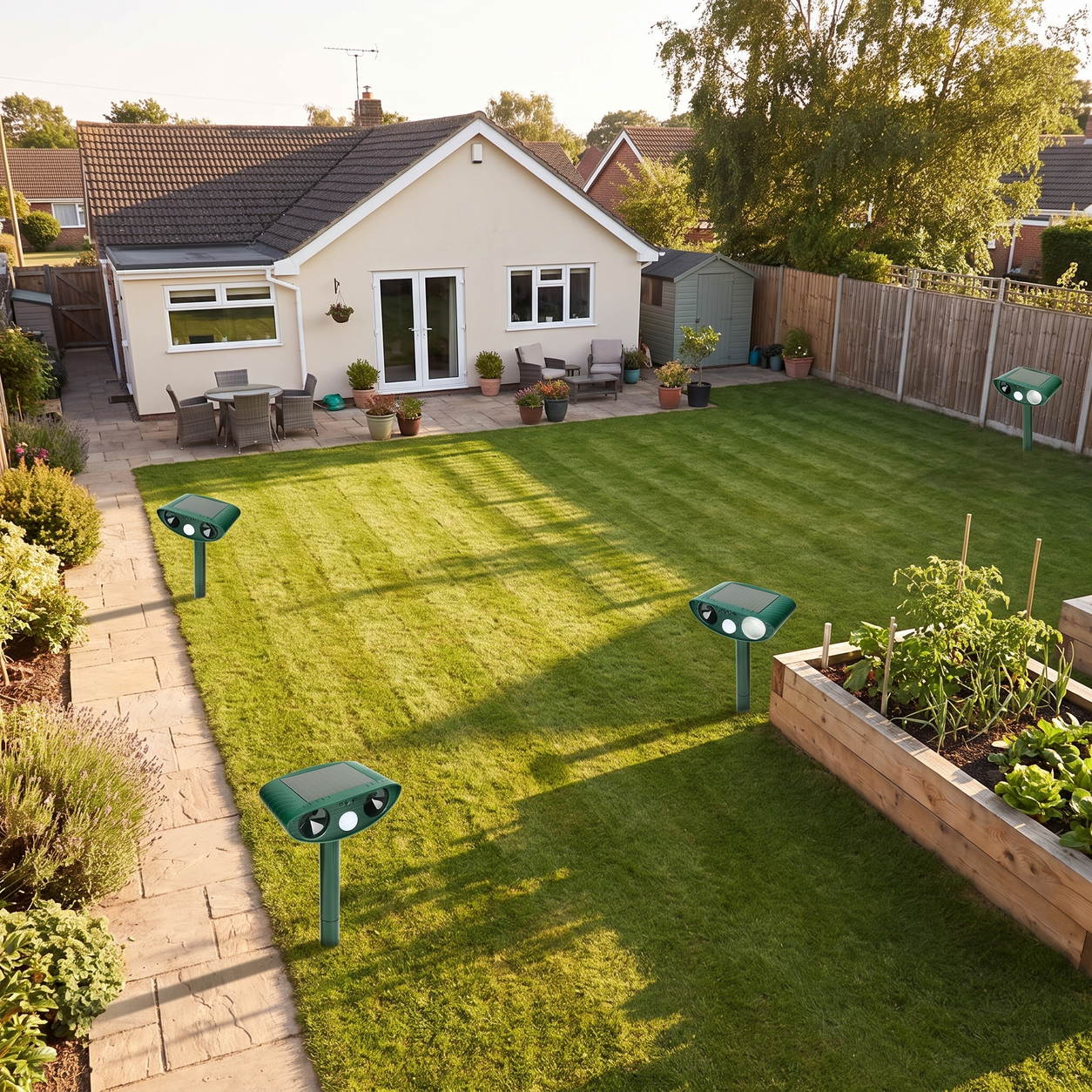
Cover the ways in, not the area. Three units handle the main approaches to a typical yard, and four ring a property so each cone overlaps the next. Adding units is how you cover ground with this product, which is why it is sold in packs.
Triggered by movement, quiet in between
The sensor holds the unit silent until something crosses. That keeps the yard free of a constant signal, and it is also what lets a small rechargeable battery and a 0.5 W draw run on solar alone.
Two channels on every trigger
Two front emitters produce high-frequency sound waves while the front LED flashes, at the same moment. Two cues arriving together are harder for an animal to shrug off than either one on its own.
Solar only, nothing to plug in
The 5.5 V panel on the head charges the unit in daylight. There is no outlet to reach, no wiring to bury, and no batteries to buy. Give it a spot with real sun, because sun is the only thing that charges it.
No poison, no bait, no trap
Nothing is left in the yard to be eaten, stepped in, or washed into a bed. It is designed to help deter by making a route feel unsafe, so the animal chooses to go elsewhere rather than being harmed.
Specs and what’s in the box.
- Targets
- Yard birds, crows, rodents, rabbits, squirrels, raccoons, snakes, and other small animals
- Trigger
- PIR motion sensor, forward facing
- Deterrent
- High-frequency sound waves plus LED flash
- Detection angle
- About 110 degrees horizontal, forward only
- Detection range
- Up to about 6 to 8 m in open conditions
- Stated coverage
- About 20 to 50 square meters per unit, open conditions
- Trigger cycle
- About 30 to 40 seconds, then back to watching
- Power
- Built-in solar panel, 5.5 V
- Battery
- 300 mAh rechargeable
- Rated power
- 0.5 W
- Weather
- IP44, rain and splash resistant
- Assembled height
- About 37.5 cm
- Head width
- About 15 cm
- Material
- ABS
- Weight
- About 310 g
- Color
- Dark green
- Install
- Push-in ground stake, no tools
In the box
- Perimeter Sentry unit
- Built-in solar panel
- Front motion sensor
- Two sound emitters
- Front LED
- Pole sections
- Ground stake
- Instructions
Versus the old ways.
| Feature | Perimeter Sentry | Sprays & granules | Baits & poisons | Motion lights |
|---|---|---|---|---|
| Humane, nothing killed | ✓ | ✓ | — | ✓ |
| Nothing toxic left in the yard | ✓ | — | — | ✓ |
| Nothing to reapply or refill | ✓ | — | — | ✓ |
| Not washed off by the next rain | ✓ | — | — | ✓ |
| Two cues at once, sound and light | ✓ | — | — | — |
| Works in daylight as well as after dark | ✓ | ✓ | ✓ | — |
| Sold and placed as a multi-unit perimeter | ✓ | — | — | — |
Real homes, real yards.

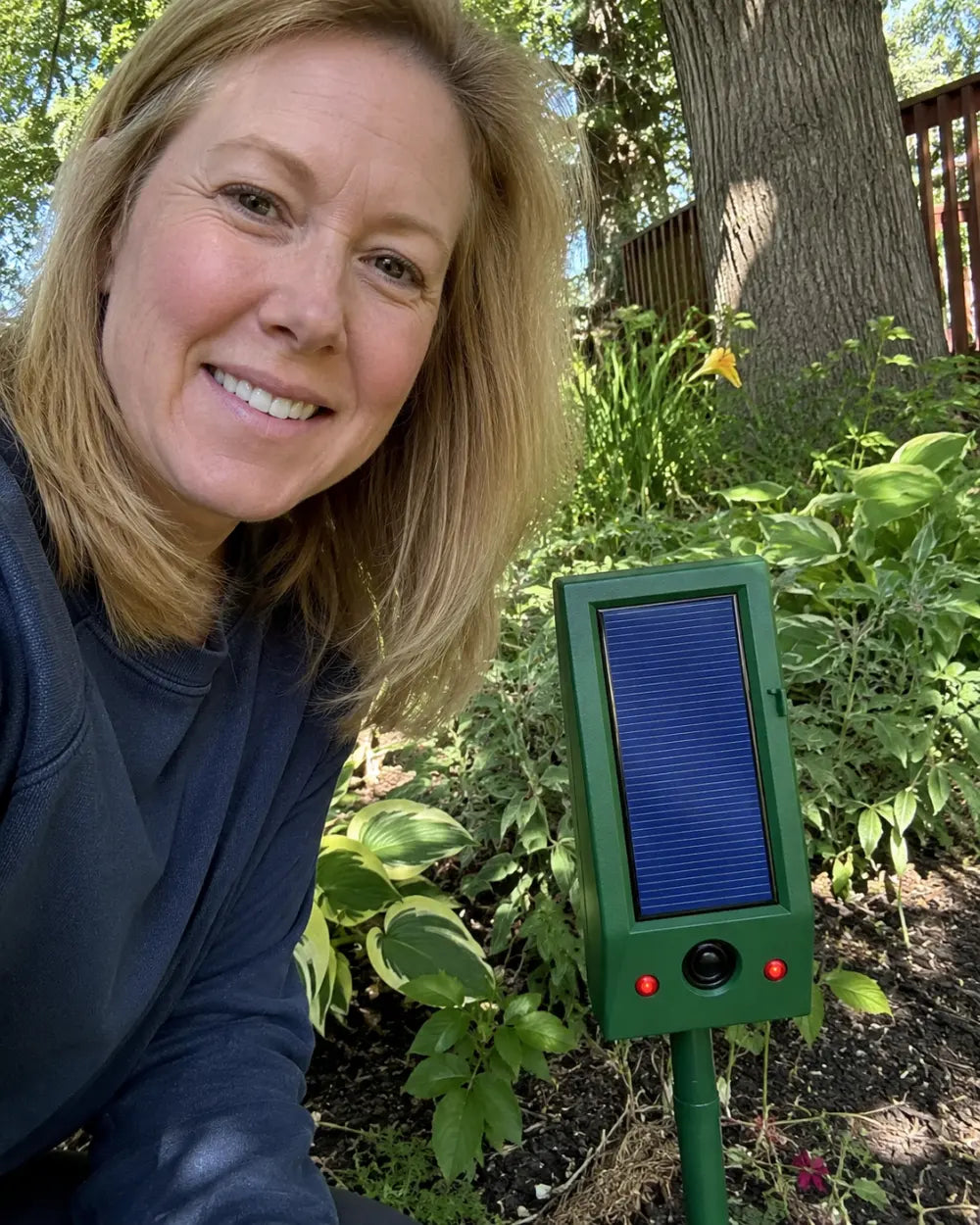


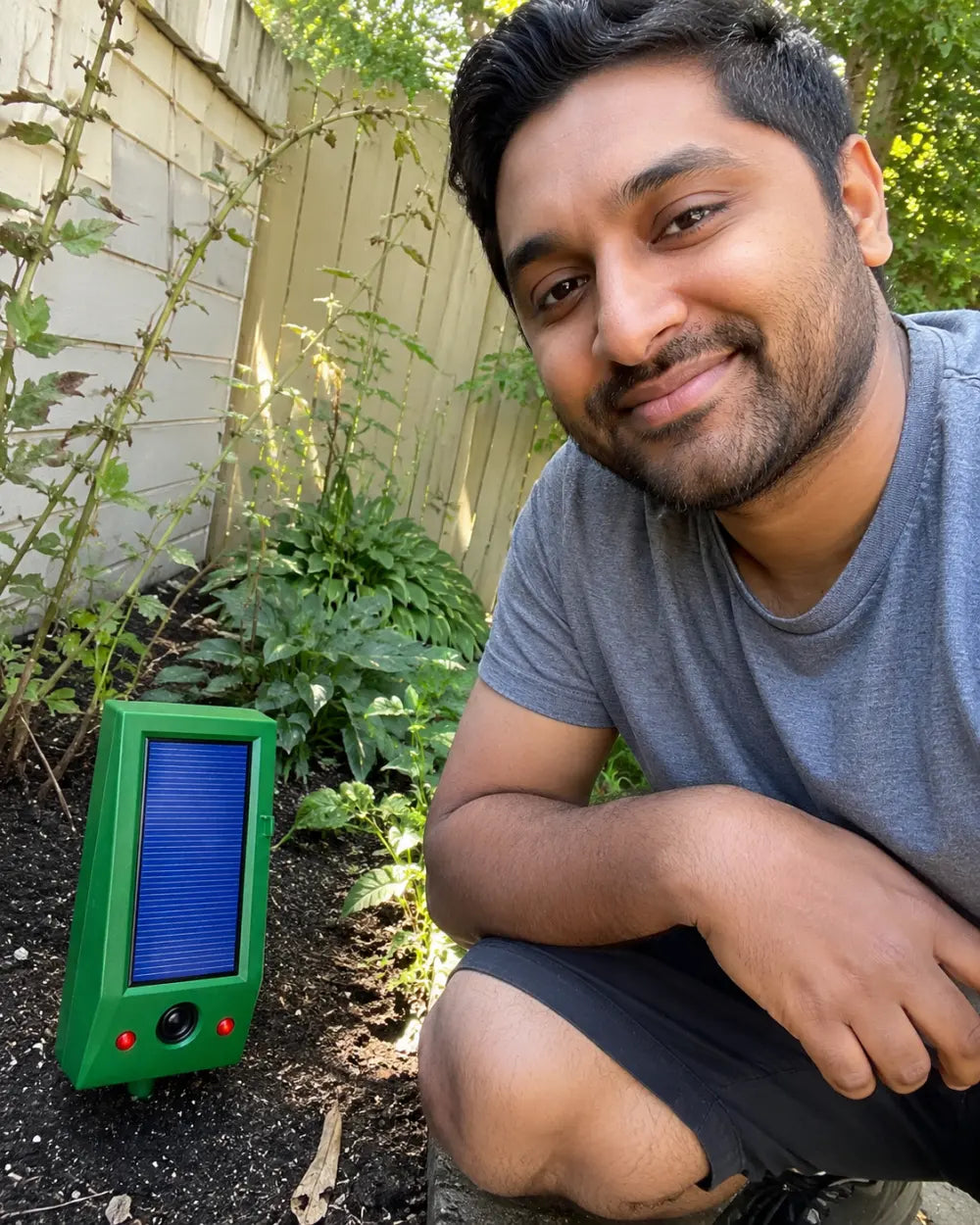

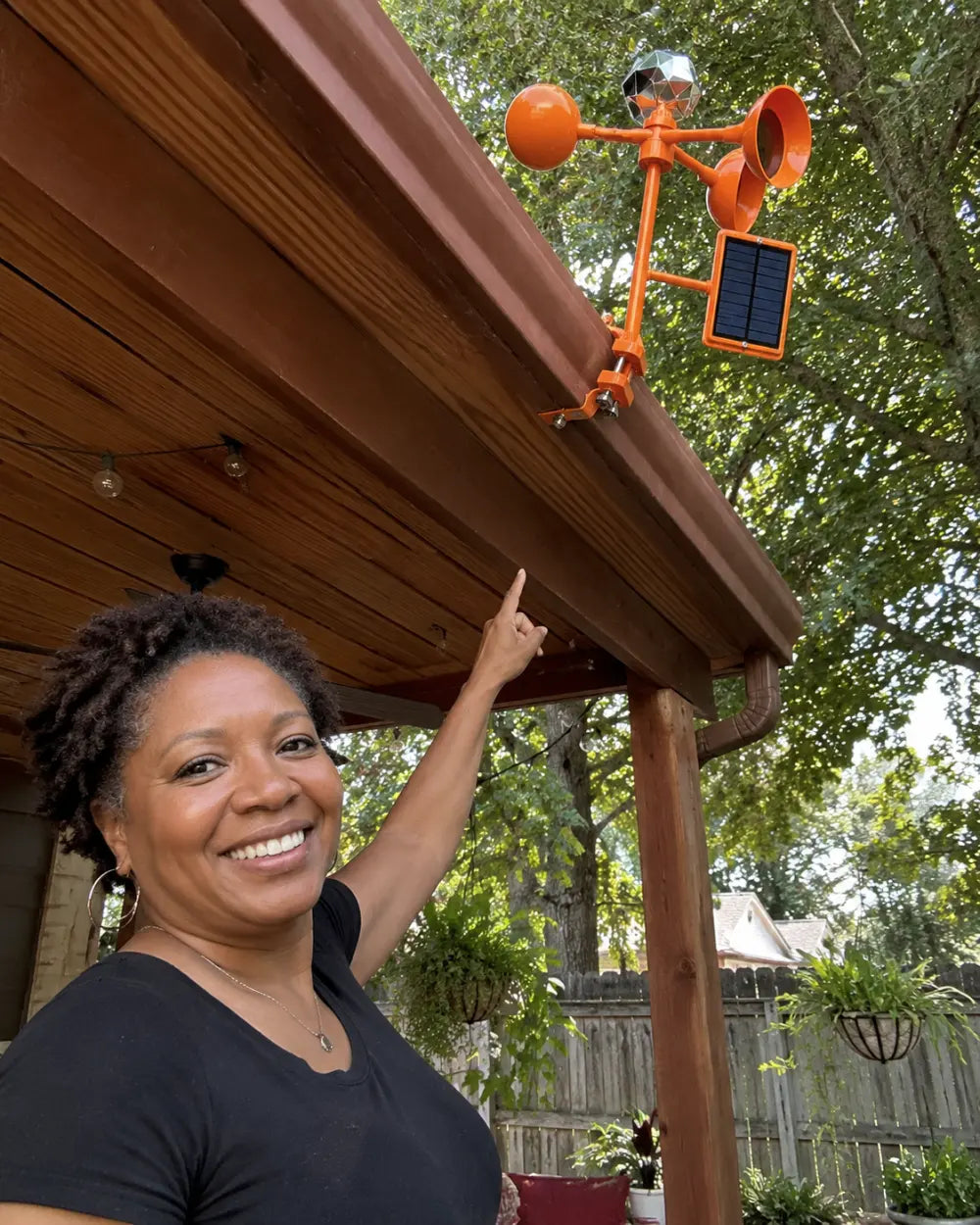
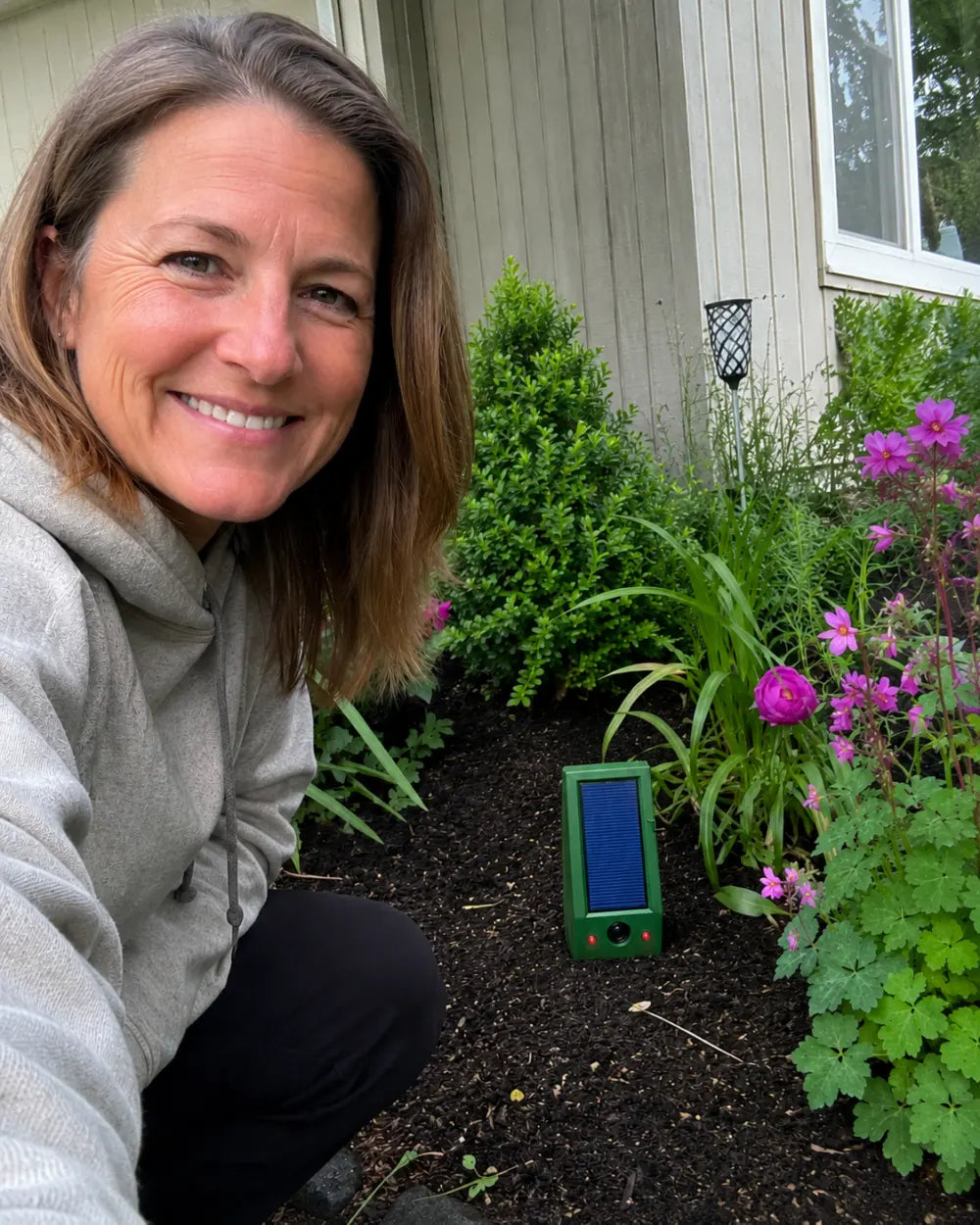
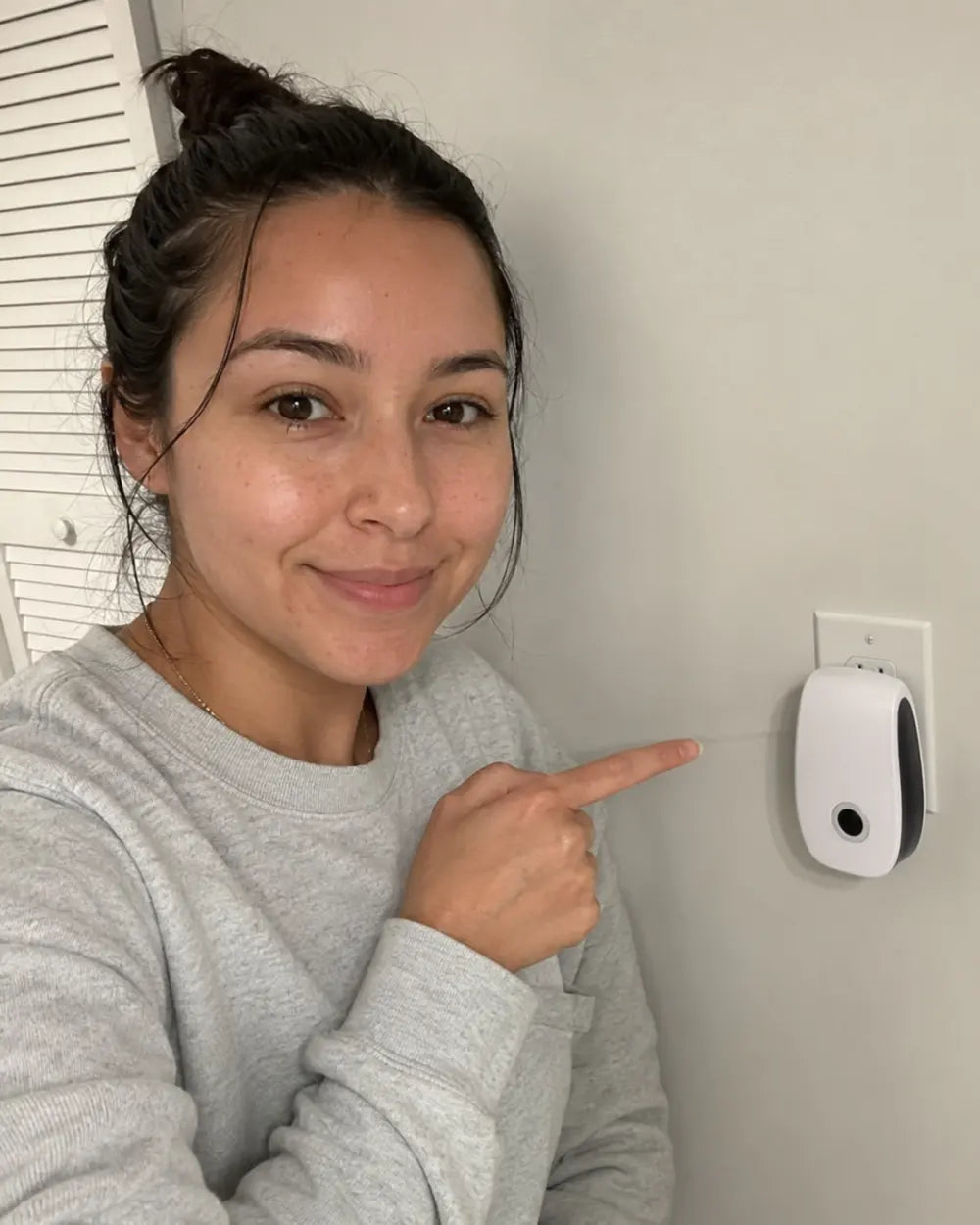
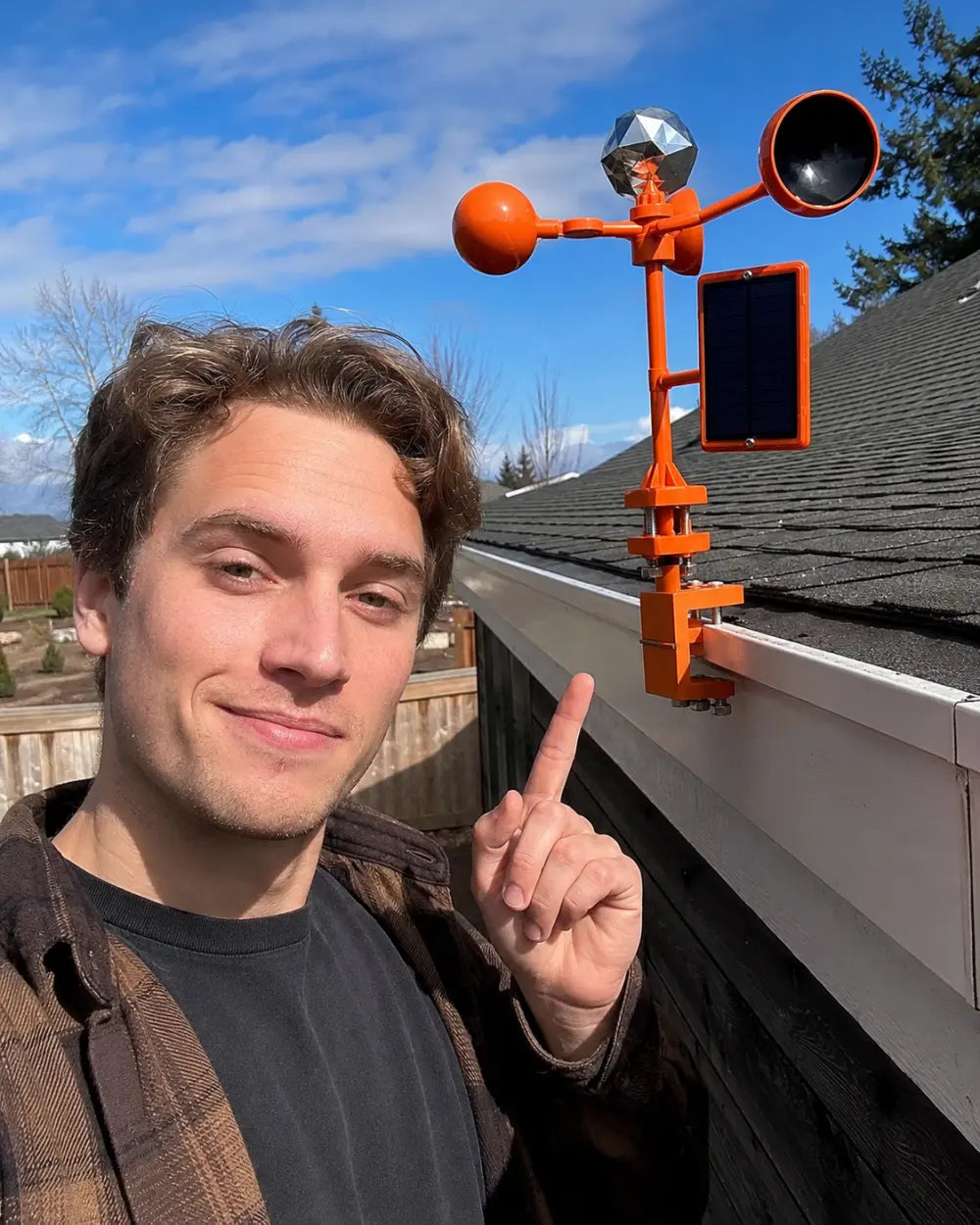


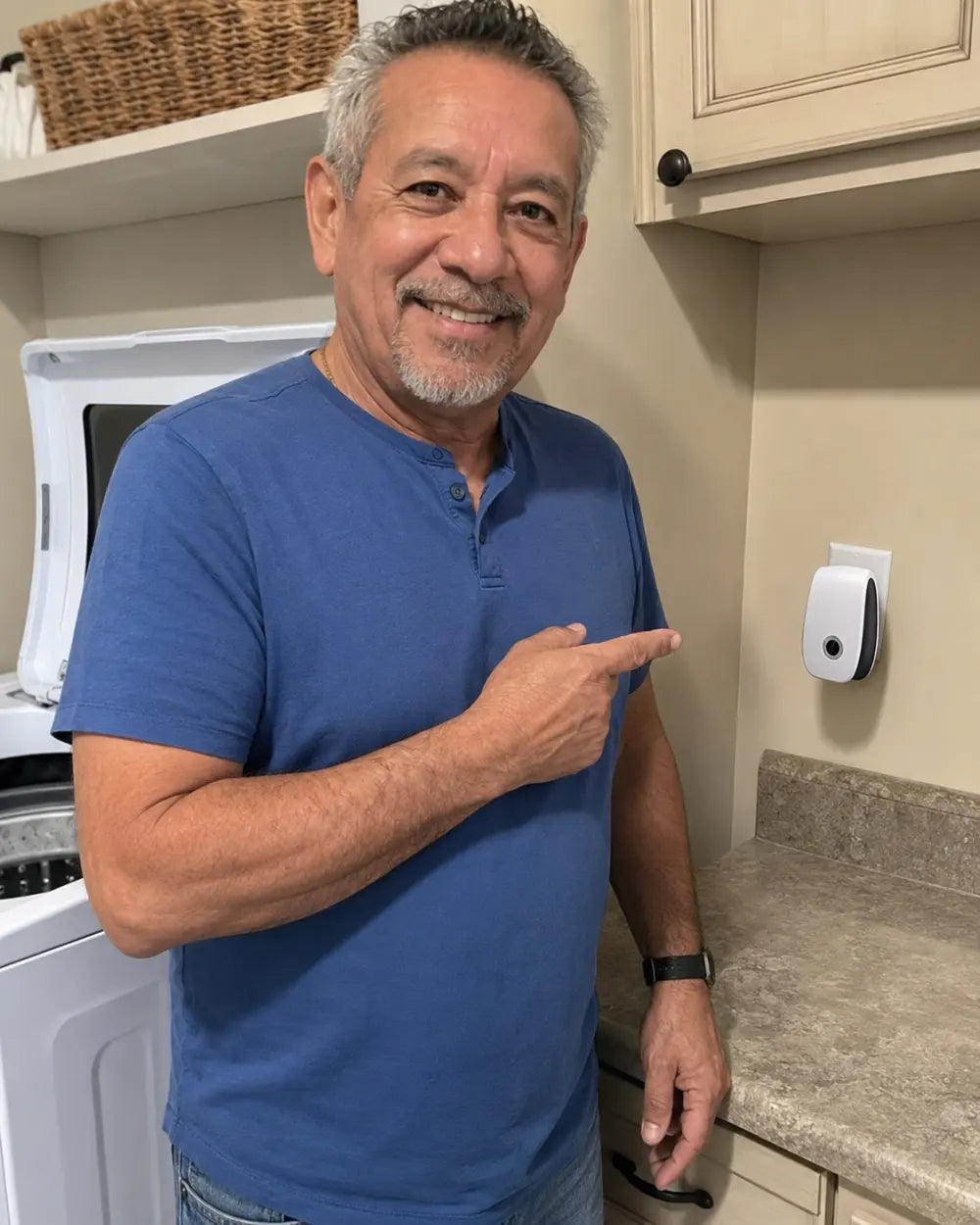

What 180 customers say.
Bought a single for the gap behind the shed where the rabbits were getting through. It handled that gap, and then they just started coming in by the side gate instead. Ordered the 3-pack a month later and that was the actual fix. The listing does say one unit is one entry point. I should have believed it the first time.
I only had the one problem spot, the run between the fence and the compost bin. One unit covers it and the digging there has stopped. It does nothing for the rest of the yard, but the page is upfront that it will not, so no complaints from me.
First place I staked it was wrong. I had it pointed at the middle of the lawn instead of at the fence line they actually walk along. Moved it to face the fence and it started catching them. Worth standing in the yard and watching where they come in before you pick a spot.
Went straight to the 3-pack because the birds were coming in from three sides. One at each corner facing out. Mornings back there are much quieter than they were last summer. Nothing to plug in matters here, there is no outlet anywhere near the back fence.
It works, inside the cone. That is the thing to understand before you buy. I started with two and had to add a third for the corner they switched to. Three has held since. Would have been cheaper to buy three at once.
What I like is that it is not making noise all day. It sits there doing nothing until something crosses, goes for half a minute, then stops. The neighbors have not said a word about it. I can just about hear something if I am standing right beside it.
Good for about six weeks on the crows, then they seemed to work out that nothing was going to happen to them and came back. Moving it to a different spot bought me another few weeks. My take is that you have to keep changing it up rather than staking it once and forgetting about it.
It has been out on the lawn edge through a properly wet spring and it has kept going. I do wipe the panel down every few weeks because it gets grubby, and I assume that is part of why it stays charged.
I was not going to spend on a 4-pack for something I had not seen work. Bought one, put it on the worst path, watched it for a couple of weeks. Then I bought the rest. If you are unsure, that is a sensible way to do it, even if it costs a bit more in the end.
The pole sections clicked together in a couple of minutes and it pushed into the lawn by hand. I have moved mine three times now chasing the rabbits around the garden, and restaking it leaves almost no mark behind.
We back onto scrub and get snakes along the wall every summer. Put two units facing that wall. We are seeing fewer crossing the lawn than we did last year. I would not call it a barrier, but it has made a difference, and there is nothing toxic out there with the dog around.
The first one went in a shaded corner under the tree and it kept running flat on me. Moved it out to where it gets sun most of the day and it has been fine since. Obvious in hindsight, given the sun is the only thing charging it.
These are individual customers’ own experiences, not typical or guaranteed results. Deterrents discourage animals rather than eliminating them, and best results come from correct placement and consistent use. “Verified purchase” means the order was confirmed in our system.
Match it to your space.
One entry point, not a yard
One unit watches one forward cone of about 110 degrees. Take it when you already know the exact way in, the gap in the hedge, the side gate, the run beside the shed. It will not cover a yard, and we are not going to tell you it does.
Two routes, or one corner properly
Cover the two ways in that animals actually use, front and back, or set both units on one busy corner facing outward so the approach is watched from two angles instead of one.
Most popular, a typical yard covered
Three units cover the main approaches to a typical yard, usually the two sides and the back. It is the pack most people settle on, because three is roughly where the obvious gaps stop being obvious.
Best coverage, the full ring
Four units ring a property so each cone overlaps the next and no easy route is left open. Choose it for a larger lot, a long fence line, or after a single or a 2-pack showed you that the activity simply moved to a side you were not covering.
Good questions.
How much does one unit actually cover?
One unit watches a forward cone of about 110 degrees and reaches up to about 6 to 8 m in open conditions, stated as roughly 20 to 50 square meters. That is one entry point, not a yard. If you want a yard covered, plan on three or four units placed around it.
Does it detect behind itself, or through a fence?
No. The sensor faces forward and covers a cone in front of the unit only. It does not see what is behind it, and it does not work through walls, solid fences, or dense planting. Anything solid in front of the sensor creates a blind spot, so give each unit a clear line to the route you want watched.
Will animals get used to it over time?
They can, and we are not going to promise otherwise. Any static deterrent can fade into the background once an animal decides nothing follows it. Two things help. Move a unit to a new spot every few weeks so the pattern does not become predictable, and run several units so an animal meets a trigger on more than one route rather than learning to walk around a single one.
Will I be able to hear it?
Some people may hear part of the cycle when they are close to the unit, and sensitivity varies from person to person and with age. Place units away from open windows, seating areas, and paths you walk regularly, and point them out toward the boundary rather than back at the house. If a spot turns out to be uncomfortable for you, move that unit further out.
Which animals is it for?
It is designed to help deter yard birds, crows, rodents, rabbits, squirrels, raccoons, snakes, and other small animals crossing into a yard. Response varies by species and by individual animal, and no deterrent works the same way on every animal that walks past it.
Does it need an outlet or batteries?
Neither. The panel on the head charges the built-in rechargeable battery in daylight and the unit runs from that. There is no outlet to find and no wiring to run. Give it somewhere that gets real sun for a good part of the day, because sunlight is the only thing that charges it.
How long does each trigger last?
About 30 to 40 seconds. After that the unit goes quiet and returns to watching. If something crosses the cone again, it fires again. It is not running continuously in between.
Can it be left out in the rain?
Yes. It is rated IP44, which means rain and splash resistant. It is not submersible and it should not be pressure washed. Avoid a spot that puddles or floods, and try not to aim a sprinkler straight at the sensor.
Is it safe around children and pets?
There is no poison, no bait, and no trap, so there is nothing in the yard to be eaten or stepped in. Dogs and cats hear higher frequencies than people do, so place units away from a dog run or the path your cat usually takes, and watch how your animals behave over the first few days.
Where exactly should I put them?
Think in routes, not in area. Walk the boundary and find where animals actually come in, the gap under the hedge, the side of the shed, the fence corner, the compost end of the garden. Stake one facing each of those, with nothing solid between the sensor and the route. The unit stands about 37.5 cm assembled, which puts the sensor at the height small animals move at.
How many do I need?
One for a single known entry point. Two for two routes, or for one corner watched from two angles. Three is where most people land for a typical yard, and four rings a property so the cones overlap and no easy gap is left. The packs cost less per unit as they get larger, so buying the coverage you need up front costs less than adding units one at a time.
Does it work in winter or on cloudy days?
It keeps working as long as the panel gathers enough light to keep the battery topped up. Short, gray winter days give it less to work with, so expect it to have less in reserve on a heavy day. Keep the panel clear of leaves, snow, and dirt, and wipe it down now and then. It makes a real difference to how the unit holds charge.
How soon will I see a difference?
Most people watching one specific route see activity on that route ease within the first week or two, as animals start choosing an approach that does not set anything off. Watch where the activity moves to. That is usually the route you are not covering yet, and it is the reason the 3-pack and the 4-pack exist.
What comes in the box?
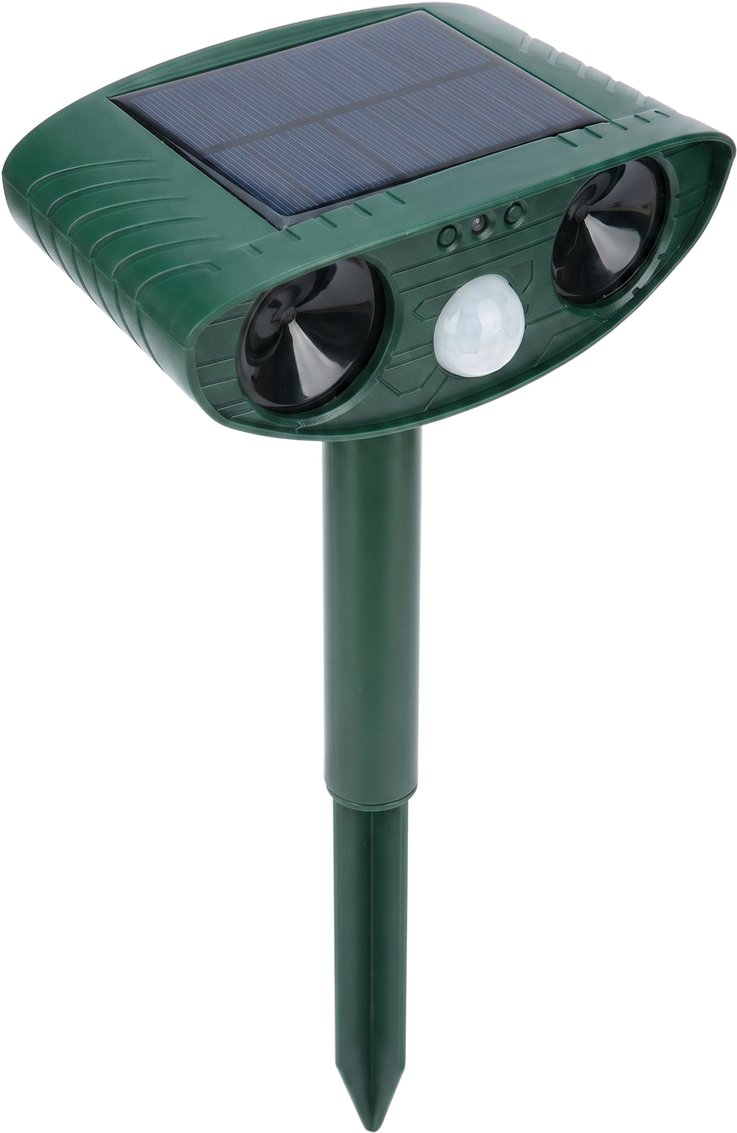
The unit with its built-in solar panel, front motion sensor, two sound emitters, and front LED, plus the pole sections, the ground stake, and instructions. Multipacks contain a full set of the same contents for each unit.
How is this different from the IonAway Yard Guardian?
The IonAway is our entry-level yard stake. It runs continuously and it suits one problem spot, like a bed that keeps getting dug up. The Perimeter Sentry is motion triggered and is built to be deployed in numbers around a boundary. If animals are crossing into your yard from several directions, the Sentry ring is the one that fits.
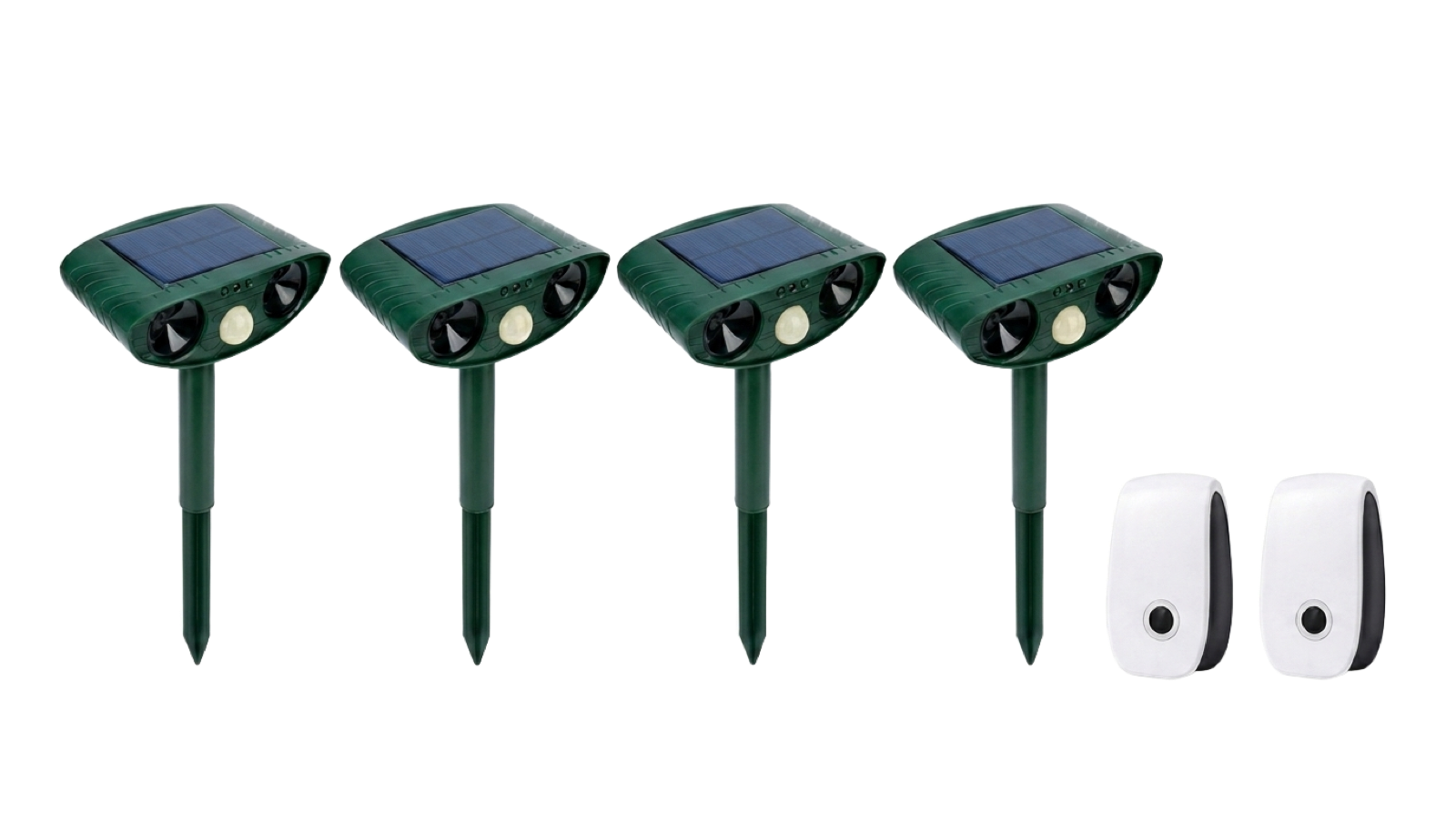
Cover the ring and the rooms
The Perimeter System pairs four Perimeter Sentries with a two-pack of Indoor Plugs, so the routes into the yard and the rooms animals slip into are handled together, for less than the pieces cost on their own.
Shop The Perimeter System →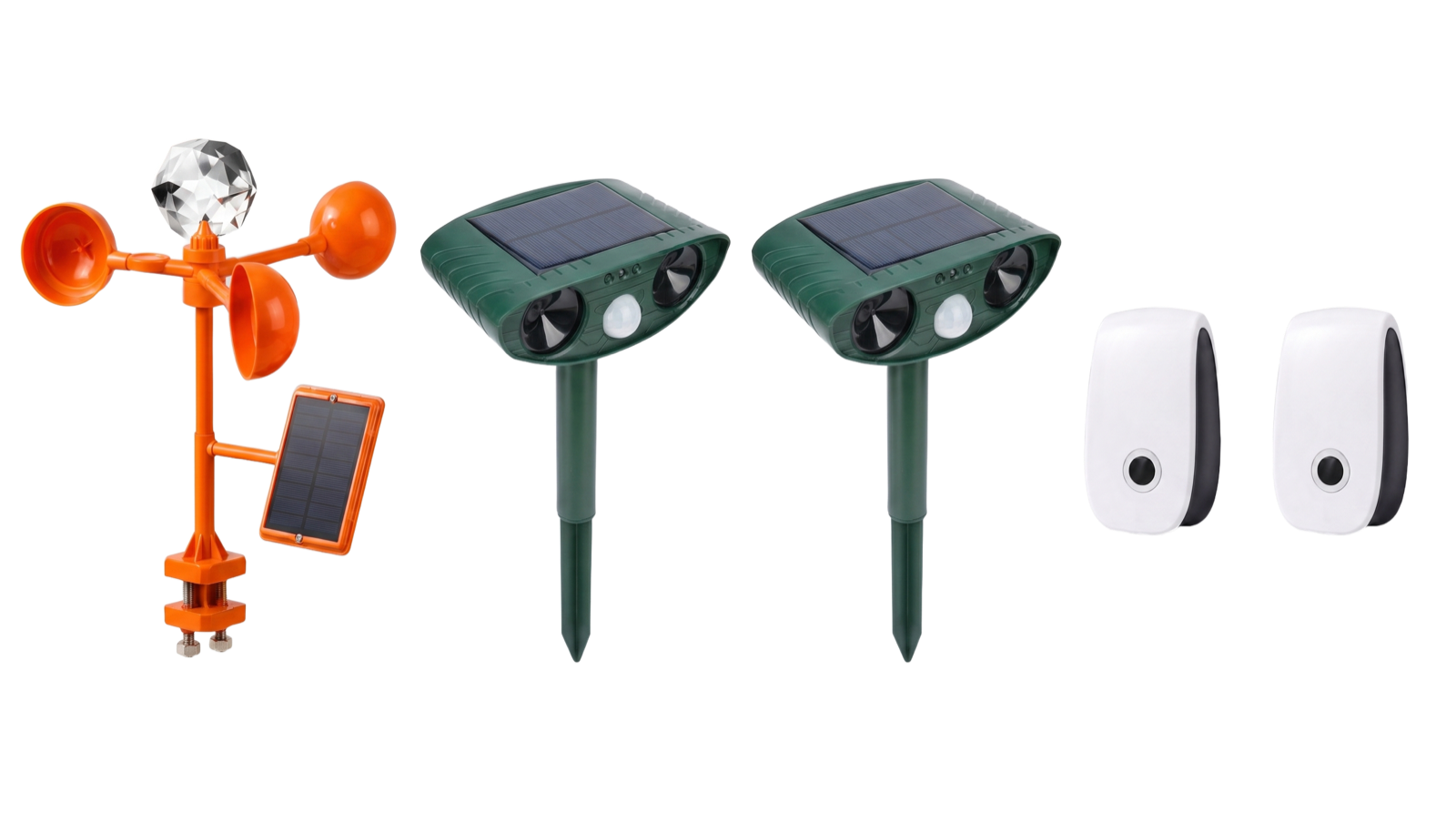
Birds landing up top too?
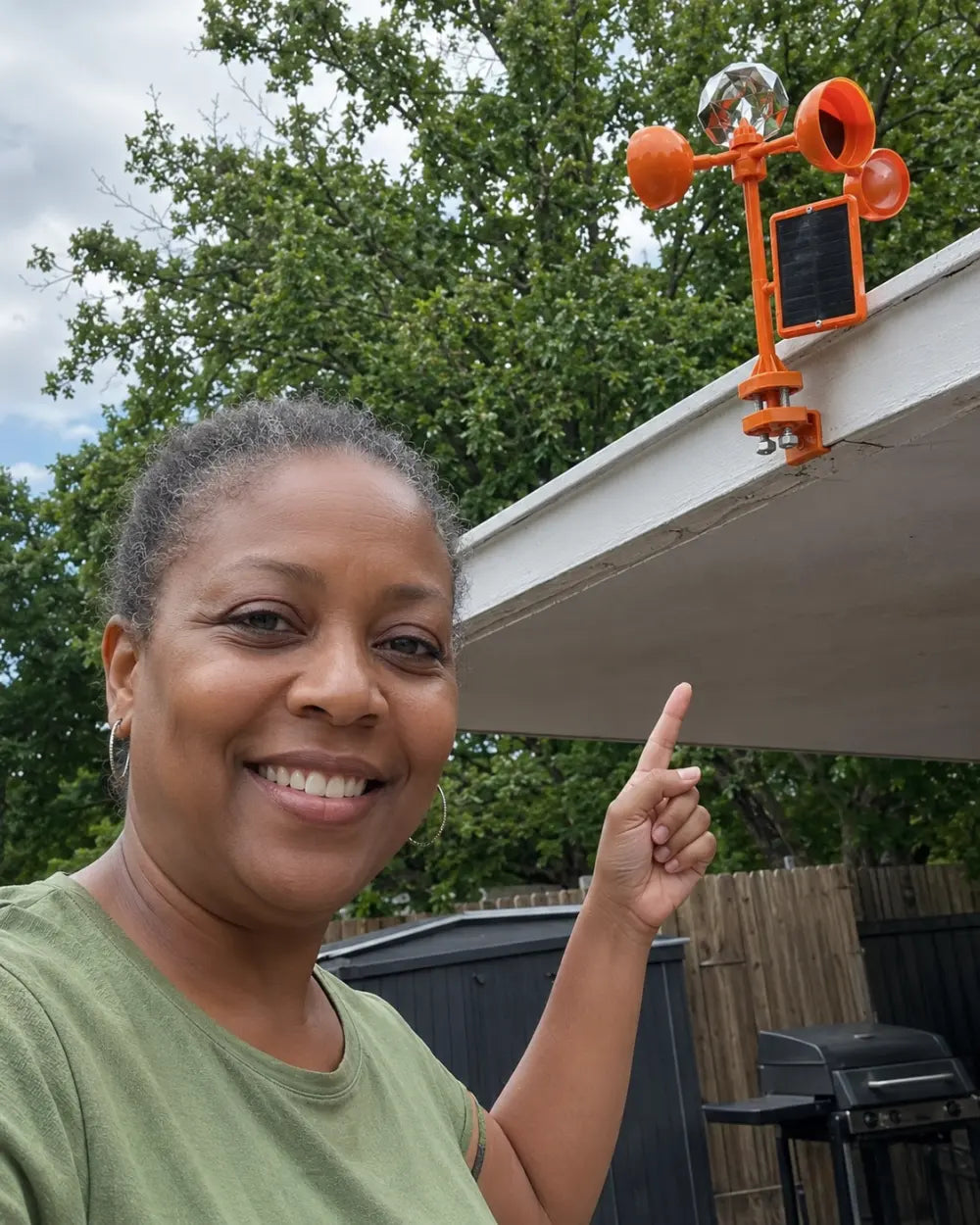
Nothing a Sentry does reaches a bird on a ridge or a gutter. The Complete System Pro puts the Rooftop Spinner up there and keeps two Sentries on the ways in, with two Indoor Plugs for the rooms.
Shop The Complete System Pro →30 nights, or your money back.
Give it a full season. If the pests do not get the message, send it back for a full refund. No forms, no fuss. Trusted across 180,000+ yards.